
External weatherproofing — Kent, London & South East
External Silicone Sealantin Chathambuilt for UK weather and movement
Joints that keep wind-driven rain out of the building fabric for years rather than seasons: correct product for the substrate, correct depth for the movement, and a tooled profile that sheds water instead of holding it.
£2m public liability cover, CITB and CSCS accredited, and free quotes — with photo quoting on small, reachable jobs.
£2m cover
public liability insurance
CITB & CSCS
accredited on site
RAMS on request
for commercial jobs
Free quotes
photo quotes on small jobs
Chatham based
Kent, London & South East
The service
What this work involves
— and who it is for
What external sealant work covers
External sealant is the flexible weather line of a building: joints between differing materials, movement joints in masonry and render, coping and parapet junctions, frame perimeters, cladding and panel joints, cill and threshold details, and the abutments where extensions, porches and canopies meet the original structure.
Every one of those joints has to do two things at once — stay watertight in driving rain and keep moving as materials expand, contract and settle. We size and prepare each joint for the movement it will actually see, use products rated for external exposure and UV, and tool the bead to a profile that throws water off the face of the building.
Who it is for
Homeowners with damp appearing around openings, at extension abutments or below copings; property owners preparing a building for sale or letting; and anyone whose external sealant has gone hard, crazed and grey and is visibly pulling away from the masonry.
For commercial clients — main contractors, developers and construction companies — external sealant is usually a package item on new builds, building refurbishments, office refurbishments and schools, priced from the joint schedule and worked from the access already on site.
When it is needed
When existing external sealant has split, crazed, shrunk back from one face or gone hard enough that it no longer compresses under a thumbnail. Also when internal damp appears in a band around an opening, at a floor-line abutment or below a parapet, and when new render, brickwork repairs or roof work has left joints open.
The best time is whenever access is already available. Sealing an elevation while scaffold is up is a modest addition to a project; the same work once the scaffold is struck is dominated by access cost.
Why professional application matters
External joints get the harshest loading of any sealant on a building: UV, freeze-thaw, wind-driven rain and a daily temperature swing that moves masonry, metal and render at different rates. A general-purpose internal sealant put into that environment will craze and detach, usually within two seasons.
The judgement calls matter as much as the product. Is this a movement joint or a static joint? What is the expected movement as a percentage of the joint width? Does this stone need a neutral-cure product to avoid staining? Does this render need priming? Should this joint even be sealed, or is it a designed drainage path that must be left open? Getting those decisions wrong is how buildings end up wetter after sealing than before.
What it costs to leave it
A failed seal never
stays a small problem
External joints fail quietly. Water does not pour through — it wicks in, a little on each wet, windy day, and it dries out slowly in the fabric. By the time anyone sees a stain internally, that joint has been letting water in for a year or more.
Saturated fabric and cold, damp rooms
Wet masonry conducts heat far faster than dry masonry. A building with failed external joints is both damp and expensive to heat, and the internal wall surfaces stay cold enough to grow mould.
Freeze-thaw damage to masonry
Water sitting in an open joint through a Kent winter freezes, expands and spalls brick faces, cracks render and lifts coping bedding. That is masonry repair, not sealant work, and it is entirely avoidable.
Escalating repair scope
A joint left open long enough stops being a sealant job. It becomes replastering internally, timber repairs at cills or roof edges, redecoration, and often scaffold hire that dwarfs the original cost of resealing.
Mistakes we get called out to fix
- Using internal-grade or cheap acrylic sealant externally, where UV and movement destroy it within a couple of seasons.
- Sealing over hard, crazed sealant instead of cutting it out, so the new bead is only ever as good as the layer beneath it.
- Filling wide masonry movement joints solid with no backing rod, producing a bead that cannot stretch and tears at the first hot spell.
- Applying acidic-cure silicone against natural stone, which can stain the stone face permanently.
- Sealing designed drainage paths — weep holes, cavity drainage and cladding drainage slots — closed, trapping water inside the build-up.
How a job runs
The order of work,
start to finish
- 01
Elevation inspection
We look at every joint on the elevation, identify which are movement joints and which are static, and flag anything that is a fabric problem rather than a sealant problem.
- 02
Free quote & product schedule
A fixed written price against measured joint runs, with the external-grade products named and the colour agreed before we order.
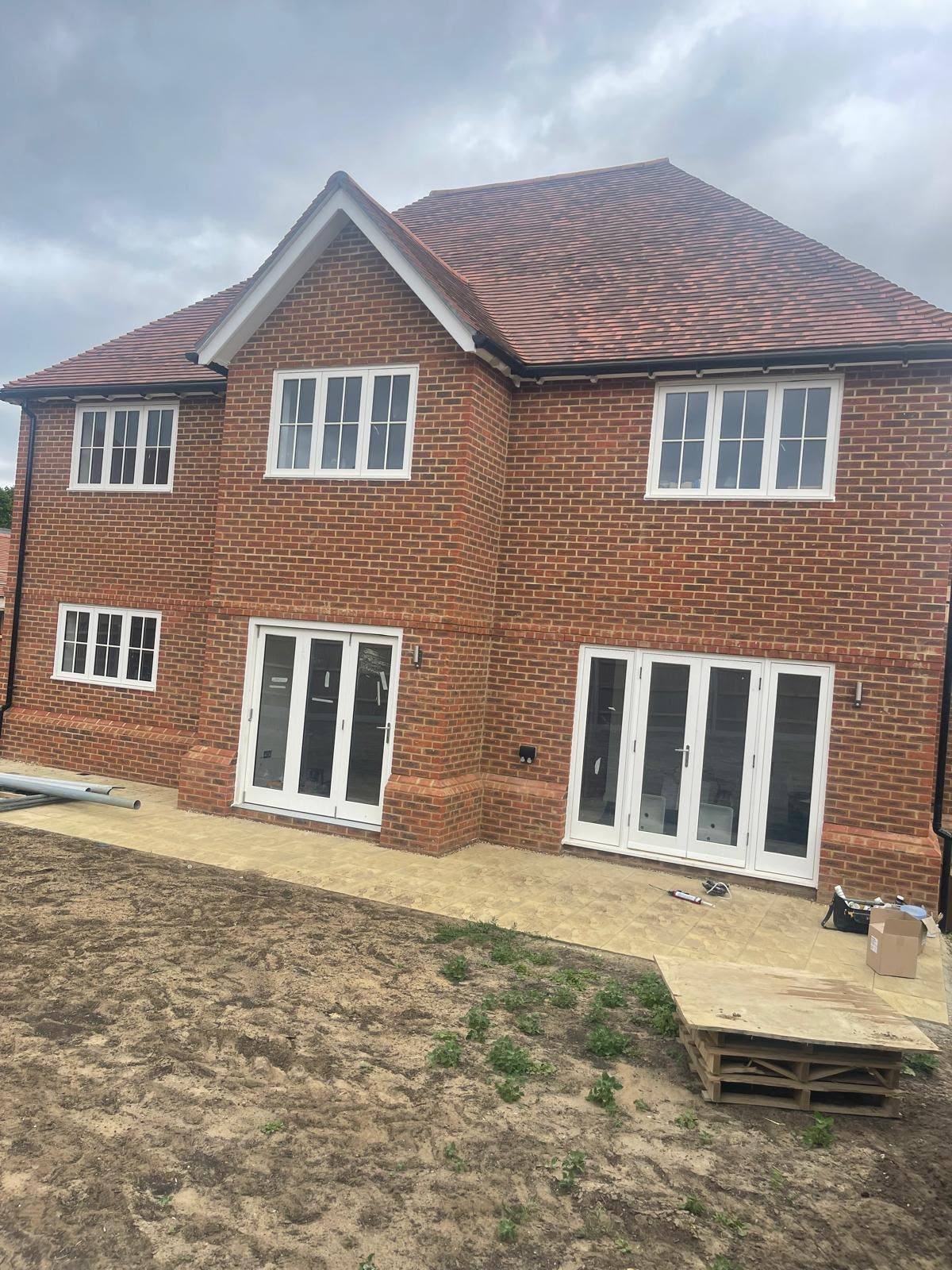
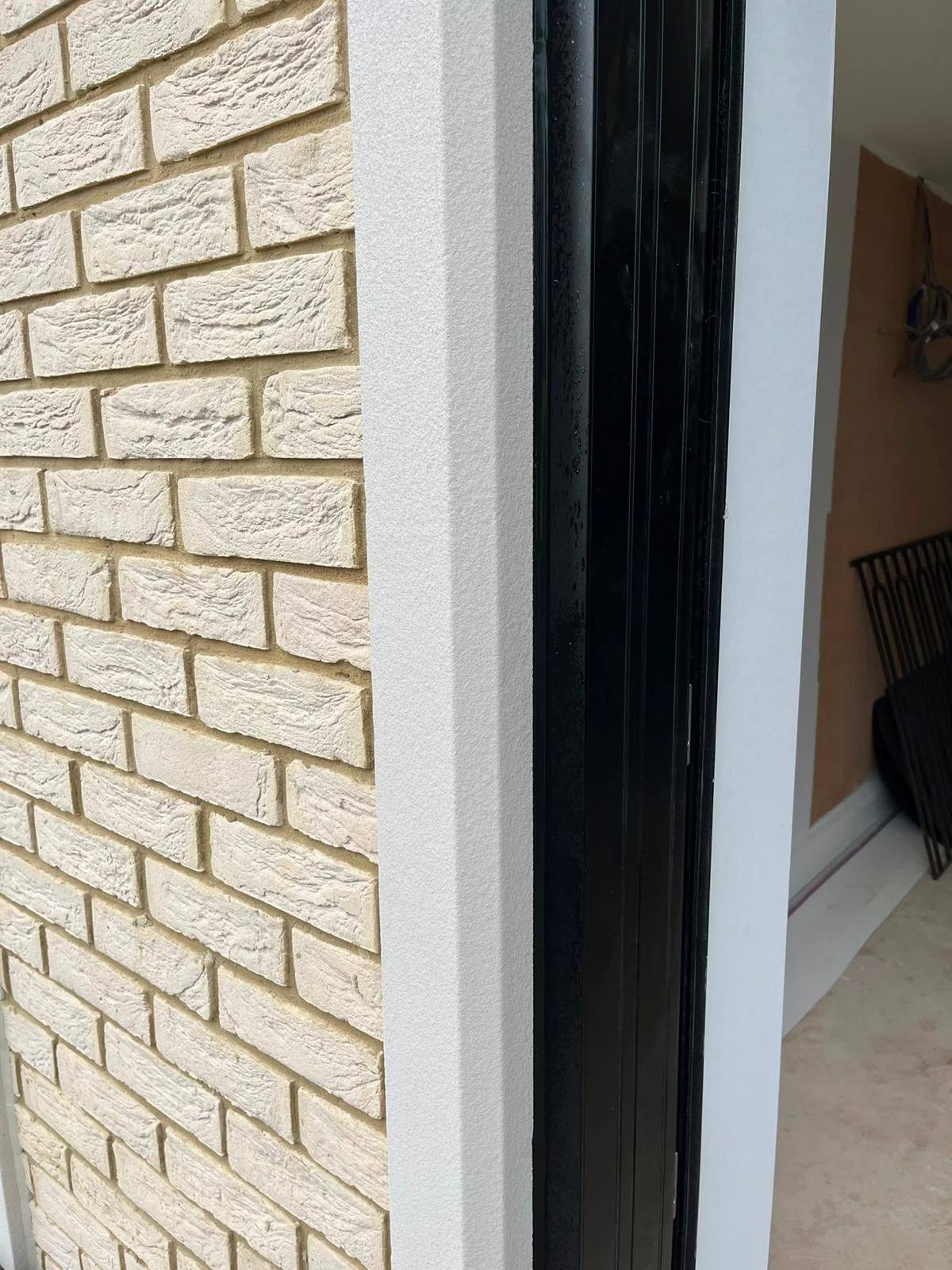
- 03
Access & preparation
Working from scaffold, tower or MEWP as required, old sealant is cut out, joints are cleaned back to sound substrate, and porous surfaces primed where the manufacturer specifies it.
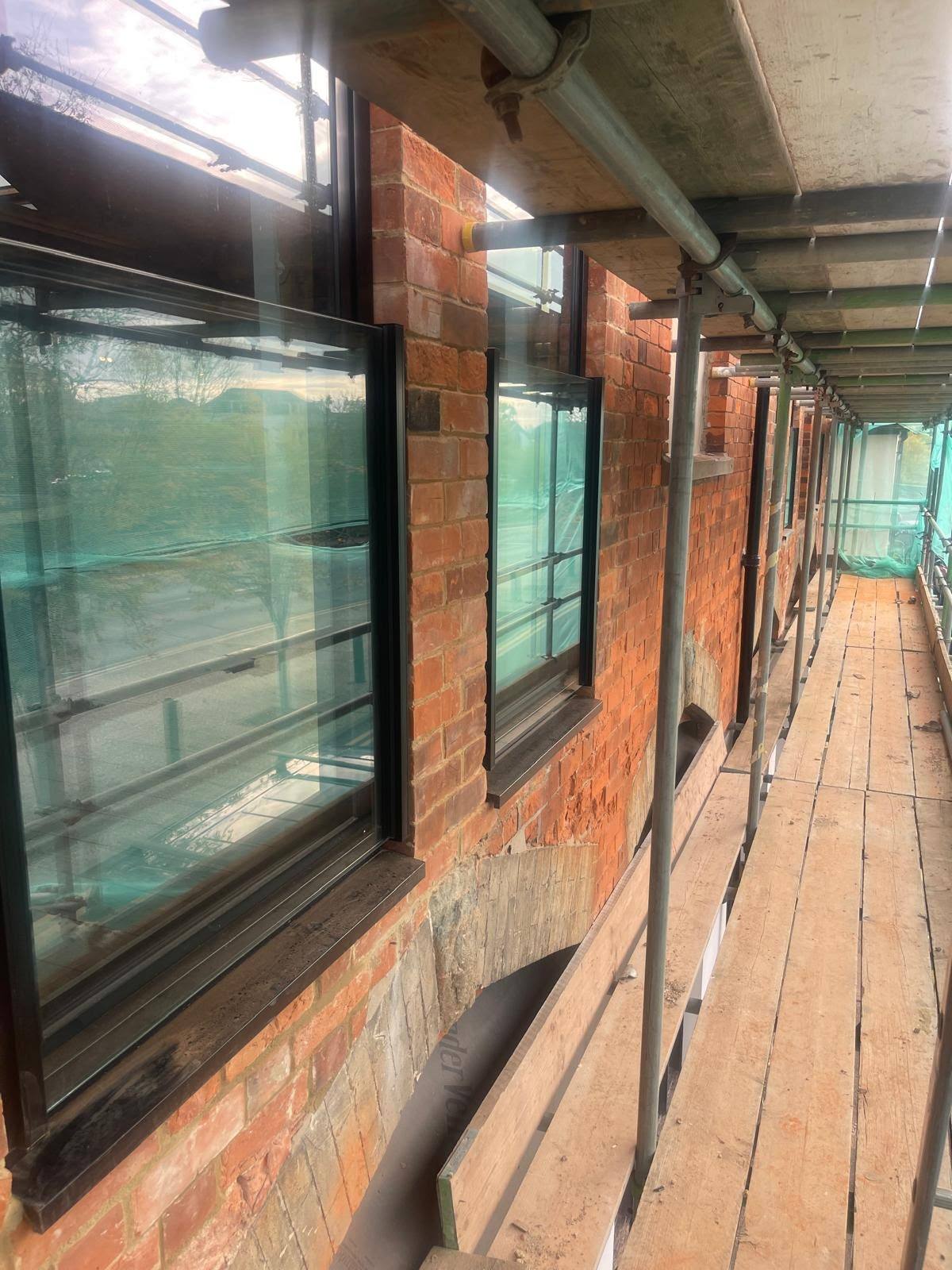
- 04
Backing rod & sealing
Closed-cell backing rod sized to the joint controls depth and prevents three-sided adhesion; beads are then applied in continuous passes and tooled to shed water.
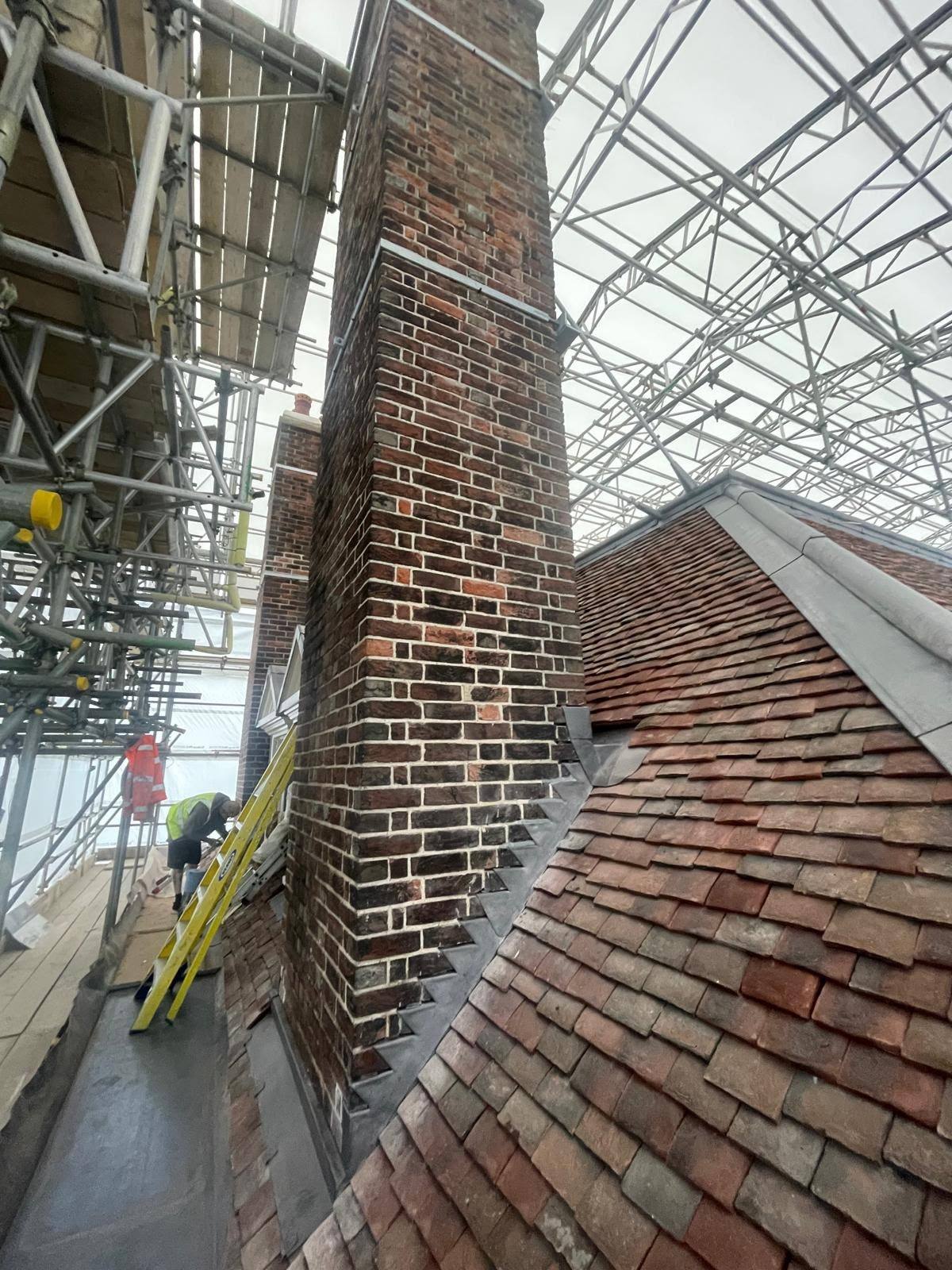
- 05
Verification & clean down
Completed runs are checked for continuity and profile, drainage paths confirmed open, masking removed and the working area left clean.
What you get
The difference a properly
detailed finish makes
Dry fabric, warmer building
Keeping water out of masonry and render restores its insulating value and removes the cold, damp internal surfaces that grow mould.
Movement absorbed, not resisted
Joints sized and backed correctly stretch and compress through seasonal cycles instead of tearing away from one face.
UV-stable products
External-grade silicones from Mapei, Illbruck, CT1 and Arbo hold their flexibility and colour under UV rather than crazing to grey.
No damage to stone or coatings
Neutral-cure products used against natural stone, coated aluminium and polished finishes avoid staining and coating attack.
Access cost used once
We plan the whole elevation in one visit while the access is up, rather than returning to pick off joints one at a time.
Straight lines from ground level
Consistent bead width and profile across an elevation, so the joints read as a detail rather than a repair.
In detail
Materials, methods
and the variations we cover
Products for external exposure
External joints are sealed with weather-grade, UV-stable, movement-accommodating silicones and hybrid sealants drawn from Mapei, Illbruck, CT1 and Arbo. Low-modulus neutral-cure silicone is the default for anything that has to move, because it accommodates a high percentage of joint movement while applying less stress to the joint faces — important on render, natural stone and lightweight panels.
Substrate dictates chemistry. Neutral-cure products go against natural stone, marble, limestone, coated aluminium and powder-coated metals to avoid staining and coating attack. Porous brick, block, render and stone often need a primer for reliable adhesion. Where a joint must be overpainted as part of a decoration scheme, a paintable hybrid is specified instead of pure silicone, because paint films will not adhere to a cured silicone face.
Method: sizing joints for real movement
External joint design starts with movement, not appearance. A masonry movement joint has to absorb thermal expansion across a whole bay, so the width-to-depth ratio matters: roughly 2:1 width to depth, bonded to two faces only, with closed-cell backing rod compressed to set that depth. Bond the sealant to three faces and its effective extension collapses — the bead is then torn apart by movement it should have absorbed comfortably.
Preparation is unglamorous and decisive. Old sealant is cut from both joint faces, dust and loose material brushed out, contamination removed, and the joint left genuinely dry. New render and fresh mortar need to cure before they are sealed. Beads are gunned in a continuous pass — stopping and restarting mid-run leaves cold joints that open first — then tooled immediately so the sealant is pressed into contact with both faces and shaped to throw water clear of the face below.
Variations of external sealant we cover
Masonry and structural movement joints in brick, block and render. Frame perimeter pointing to windows, doors and shopfronts. Coping, parapet and capping joints. Cill, threshold and canopy junctions. Abutments where extensions, porches, conservatories and dormers meet the main structure. Cladding, rainscreen and panel joints, including curtain walling. Balcony and terrace edge details. Sealing between dissimilar materials — metal to masonry, timber to render, stone to concrete — where differential movement is highest.
Colour-matched sealant is available across these applications so the joint reads with the brick, render, stone or cladding rather than drawing a pale line across the elevation.
Domestic and commercial differences
On a house the work is often a handful of high-value joints: around openings, at an extension abutment, beneath copings. The value is in diagnosis as much as application — telling you honestly when the water is coming from a failed cill, a blocked gutter or a render crack rather than the joint you asked us to seal.
On commercial elevations it is volume and consistency: hundreds of metres of joint, priced from the joint schedule, applied from the access provided, phased around facade trades and inspected as a whole. RAMS are issued on request, our CSCS cards and CITB accreditation cover induction requirements, and £2m public liability cover is in place before we start.
Questions
What customers ask
before booking
- How much does external sealant work cost?
- It is quoted per job and quotes are free. Price is driven by joint length, substrate, colour and — most of all — access. Reachable ground-floor work can often be priced from photographs; elevations are quoted after a site visit.
- How long does external sealant last?
- A correctly specified, correctly sized external joint typically gives well over a decade, and often fifteen to twenty-five years on a sheltered elevation. South-westerly exposed faces work harder and age faster. We do not advertise a guarantee — we tell you what the joint will realistically do.
- Can you work in winter?
- Yes, provided the joint is dry and above the product's minimum application temperature. We will not seal wet or frozen substrates, because adhesion fails and the work has to be redone.
- Will sealing the joints stop my damp problem?
- If the water is entering through the joints, yes. If it is entering through a failed cill, cracked render, blocked drainage or a roof detail, sealant only masks it — and we will tell you that at the quote stage rather than take the job on false terms.
- Do you match the colour to the brick or render?
- Yes. Colour-matched sealant is available in a wide range of shades. We agree the colour with you before ordering so the joint sits into the elevation rather than standing out.
- Do you need scaffold?
- It depends on height and joint length. On commercial sites we work from the scaffold, tower or MEWP provided. On domestic work we say up front what access is needed so it can be arranged or planned to coincide with other external work.
- Can you seal weep holes and drainage slots to stop water getting in?
- No — those are designed drainage paths and sealing them makes matters considerably worse by trapping water in the cavity or cladding build-up. Part of our job is knowing which openings stay open.
- Do you handle emergency water ingress?
- We prioritise active ingress where the diary allows, but we are a two-person team so we cannot promise same-day attendance. Call 07342 520584 and you will speak to an owner who can tell you honestly when we can be there.
- Which areas do you cover for external work?
- From our base at The Historic Dockyard in Chatham we cover Kent, London and the South East, including Maidstone, Sevenoaks, Tunbridge Wells, Kings Hill, Meopham, Whitstable, Tenterden, Bexley and the City of London.
- How is the work paid for?
- Larger and commercial jobs are invoiced. Smaller jobs are settled by bank transfer on completion. Quotes and site visits to price the work are free.
Related sealant services
- Expansion joint sealing
Correctly sized and backed movement joints that flex with the structure instead of splitting through the middle.
- Window & door silicone sealing
Perimeter sealing that keeps draughts and driving rain out of the building envelope, internally and externally.
- Cladding & curtain walling sealing
Facade and curtain walling joints sealed to line and detail at height, from the access provided.
- Commercial silicone sealant application
Sealant packages for office refurbishments, new builds, building refurbishments and schools, worked to the main contractor's programme.
- All sealant services
Where we work
Based at The Historic Dockyard in Chatham, covering Kent, London and the South East — including Sevenoaks, Tunbridge Wells, Maidstone, Kings Hill, Tenterden, Whitstable and City of London.
Get the weather line on your building sealed properly
Send photos or book a site visit. You will get a free written quote with the products named, the colour agreed and a straight answer on whether sealant is the right fix.
£2m public liability cover · CITB & CSCS accredited · RAMS on request · Mon–Sat, 7am–7pm · Sunday closed